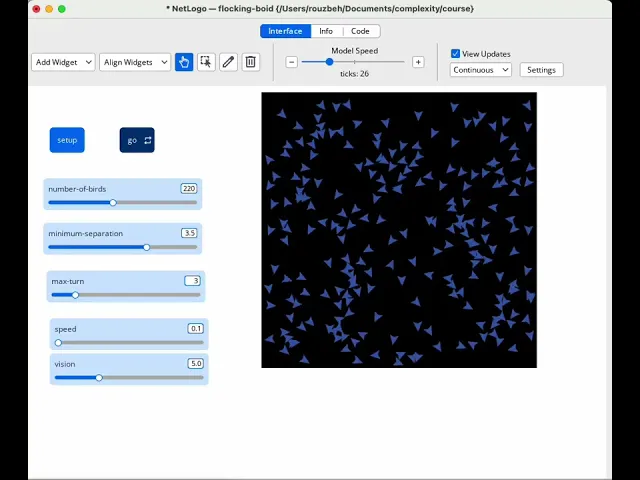
SanderLang Flockmates
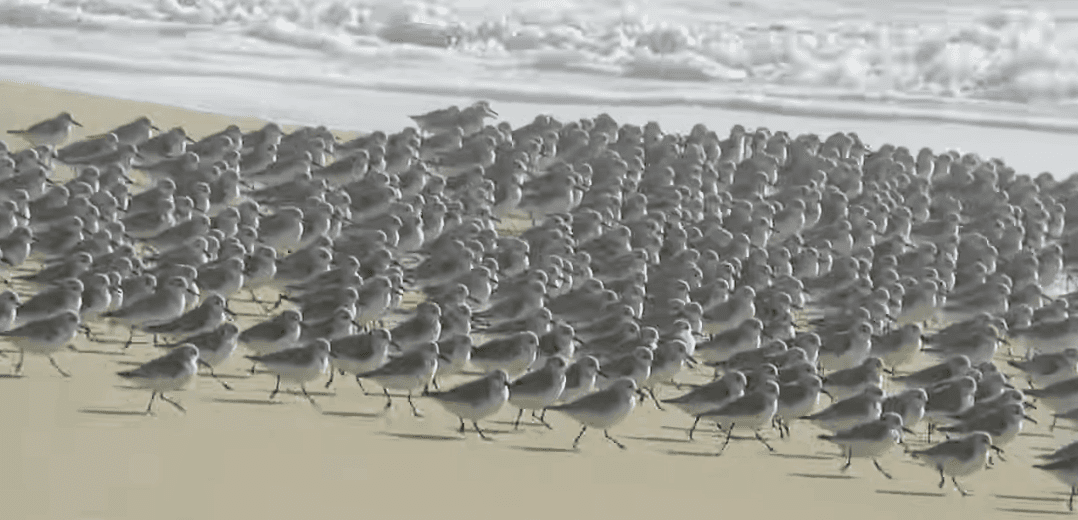
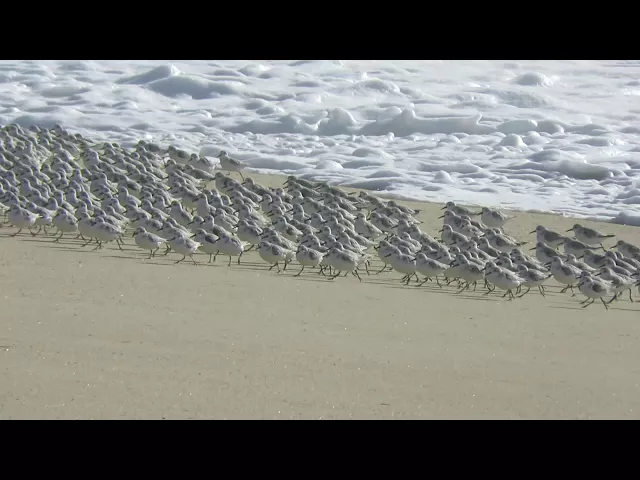
Since childhood, I've been fascinated by the way birds form flocks. Whenever I look at the sky I wish to see a flock of birds. If you get lucky and see one, they are always different yet similar. Some have similar patterns, like the flocking of migratory Canadian geese, and others are more random like the flocking of sanderlings at the beach.
I enjoy bringing these inspirations from nature into my work, hoping to better understand some of its wonders. This idea inspired SanderLang framework: an agentic AI framework that was inspired by Sanderlings on a beach. It is worthwhile to watch them again and then dive into the wonderful world of dynamic complex systems and the next frontier of scientific discovery. i.e. solving problems beyond Problems of Simplicity and being able to solve problems of organized and disorganized complexity.
Computational Complexity
My initial intuition and motivation behind SanderLang was more of a computational complexity question - one that is motivated by a problem like Knapsack problem. I thought: let's have many small language models serving small agents - in this case SanderLang agents - performing smaller computational tasks. So as I started coding SanderLang last week, the question of orchestration came to the forefront. There are tons of research and practical methods in the agentic AI world addressing the questions of orchestration. But that is not how things happen in nature - or at least how Sanderlings form flocks.
So little did I know that scientists in different fields, other than computer science of course, are looking at the problem of complexity through different lenses. From computer science point of view, complexity is defined by the computational resources that are needed to answer certain types of questions and consequently we have classified different kinds of questions that computers can answer. After all, the whole field of computer science was formed when Kurt Gödel asked an essential question:
"what are the limitations of our formal axiomatic logic and mathematics?"
That question and the efforts by others to answer that question (notably by Alan Turing and Alonzo Church) led to the creation of a new scientific field: computer science which ultimately wants to answer this question:
"what can be computed?"And how much time, memory and space are needed to compute answers to certain questions ( i.e. complexity from computer science point of view that was developed mainly by Stephen Cook)
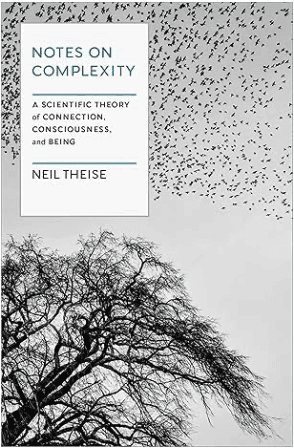
Complexity: A Scientific Theory of Connection, Consciousness, and Being
Complexity theory, however, as a new scientific field is an encompassing scientific discipline that tries to simulate and demystify all the dynamic complex systems around us: whether we want to understand the formation and movements of hurricanes or understand the biological, technological or economical phenomena and beyond. And of course computation is at the heart of this topic since we need to simulate these dynamic complex systems if we want to understand them (for example, how birds form flocks?). As I was randomly - or maybe not so randomly - getting lost in the stacks, I came across an interesting book: Notes on Complexity ( by Neil Theise, a medical pathologist ) which is a great book written for the laymen audience.
Before finishing the book, I had to jump deeper into the topic and looked for more academic works (for instance, works of Melanie Mitchell) in this fascinating field of inquiry.